

In organizational change management, an ethical, collaborative approach becomes a fundamental pillar for achieving meaningful, sustainable transformations. This article explores how to build change from a sense of shared purpose — respecting human dignity and promoting genuine alignment between organizational values and people’s needs.
On November 26, the webinar “Building our shared vision, identifying impacts, and co-creating our strategy for change” was an opportunity to go deeper into the principles of people-centered organizational change management. The event, led by Miriam Larios Mejía, made clear that for change to be effective and ethical, it must put people before urgent organizational goals.
Changing from the “We”: beyond resistance
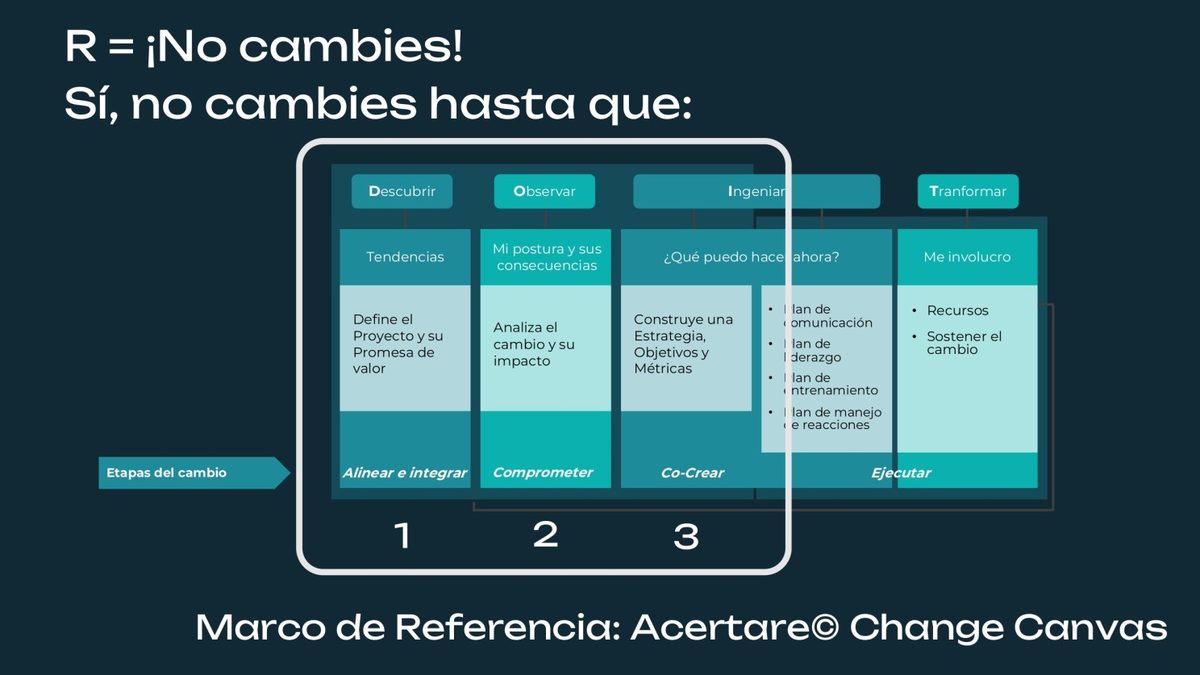
Acertare’s DOIT Change© model invites us to change the traditional narrative around resistance to change. Rather than treating it as an obstacle, ethical change management seeks to make change attractive and meaningful. This is achieved through:
- Discover: reflecting on the environment and the reasons driving the transformation.
- Observe: collectively examining our stances toward change.
- Engineer: co-creating strategies that respect shared identity and values.
- Transform: setting concrete goals and a collective action plan.
Building a shared vision: purpose and co-creation
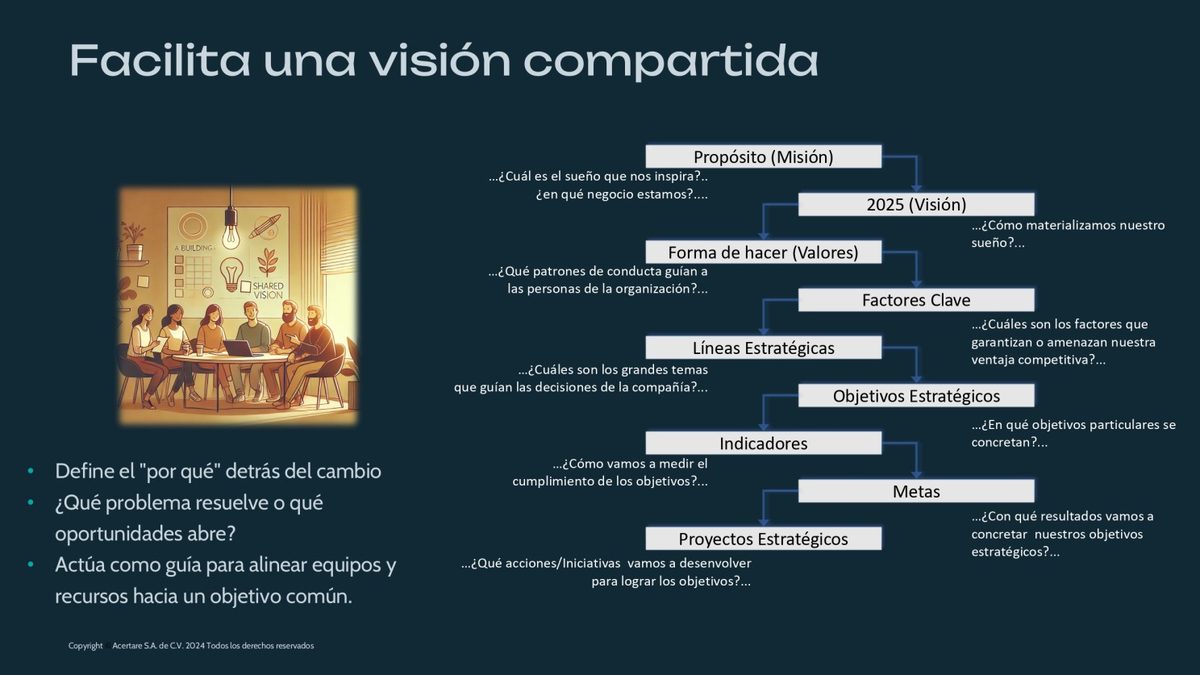
The key to successful change lies in establishing a common purpose that inspires all stakeholders. This purpose must not be imposed — it must be co-created.
How to achieve it:
- Define a clear purpose that aligns business objectives with the common good.
- Tell shared stories that connect with individual and organizational aspirations.
- Foster empathetic leadership that motivates and inspires.
Ethical impact assessment
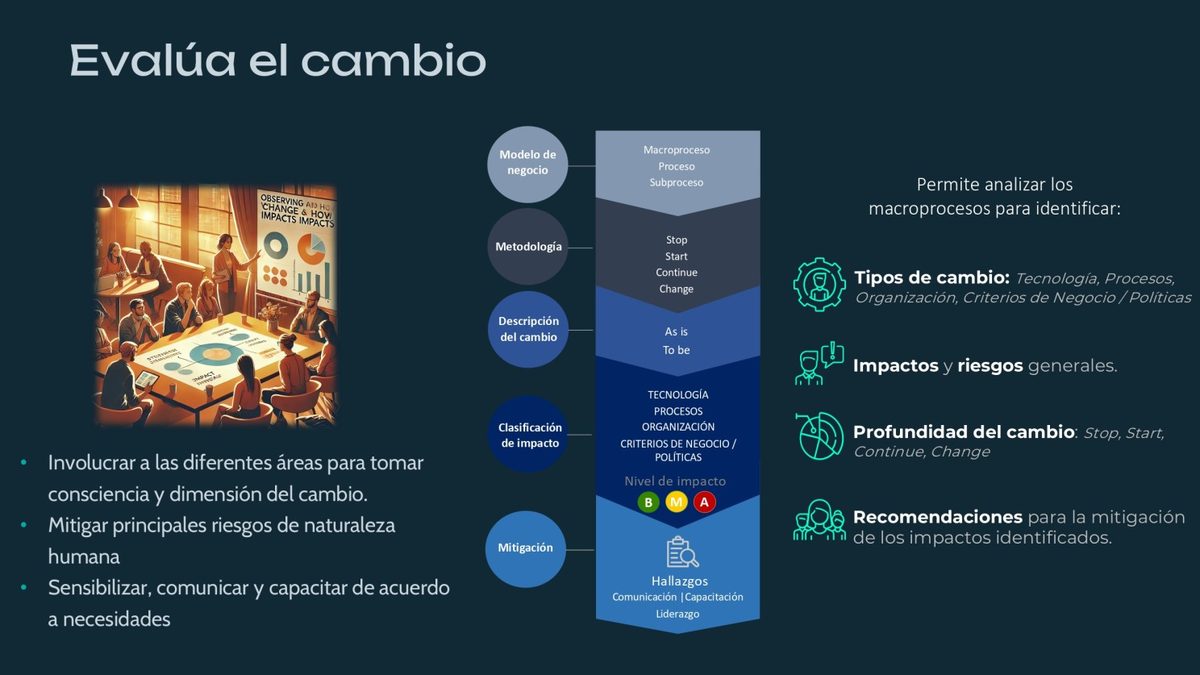
Responsible change requires identifying and managing impacts on people and organizational dynamics. This includes:
- Assessing how the change will affect different groups.
- Anticipating reactions and fears, turning them into opportunities for dialogue.
- Designing support strategies that promote collaboration.
Co-creating an ethical organizational change management strategy
The success of change depends on a strategy that respects the organizational culture and individual stories. This includes:
- Engineering solutions that involve all stakeholders.
- Defining clear goals that align individual and organizational objectives.
- Training leaders and teams to facilitate a smooth transition.
Conclusion: ethics and unity in organizational change management
Changing with purpose and unity transforms not only organizations but also the lives of the people who make them up. By adopting an ethical approach, organizations achieve sustainable results while building trust and commitment among their teams.
Organizational change management, when grounded in ethics and respect for human dignity, becomes a powerful tool for sustainable development and collective well-being.