
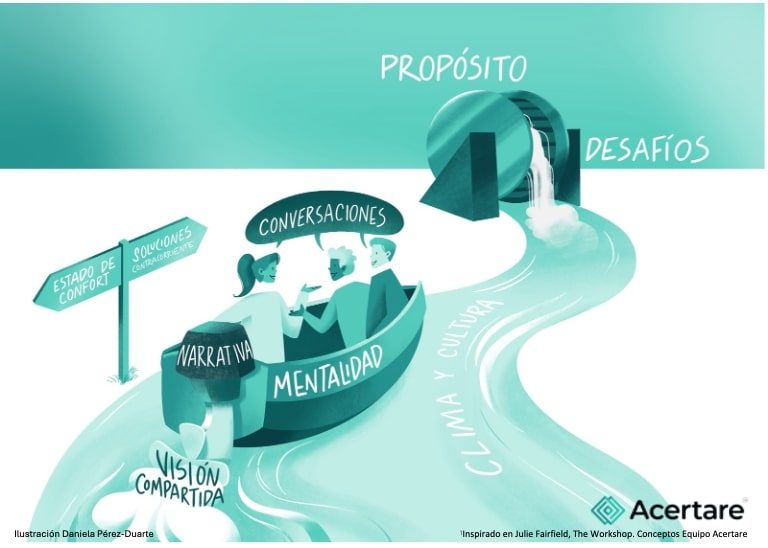
In a world where everything happens “everywhere, all at once,” the ability to adapt and manage change has become an essential competency for organizations. Change Management is not only about implementing new technologies or processes — it is also about enabling people to adopt and adapt to these changes effectively. In this article, we take an in-depth look at what Change Management is, what it is for, and how it is applied at both the individual and organizational levels.
What is Change Management?
Change Management is a set of principles, methodologies, and practices designed to help organizations and their members adapt and thrive in a constantly evolving environment. It focuses on facilitating the transition from a current state to a desired future state, addressing both the technical aspects and the people involved.
Acertare’s definition of Change Management
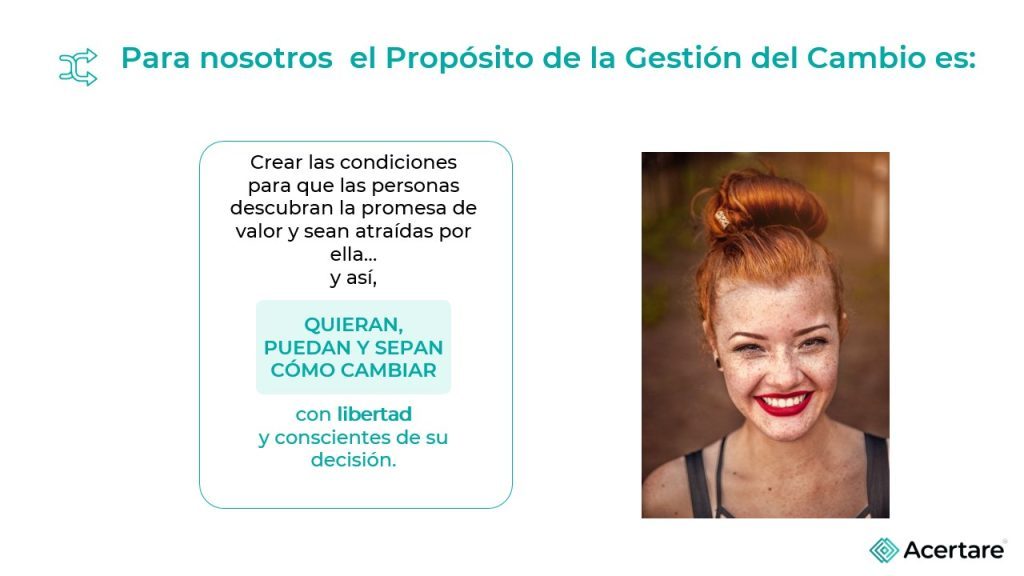
For Acertare, Change Management means creating the conditions for people to discover the promise of value and be drawn to it — so that they want to, know how to, and are able to change, freely and conscious of their decision. It is not just about implementing changes from the top down, but about helping people see change as something attractive and beneficial to them.
What is Change Management for?
Change Management makes it possible for change initiatives within an organization to be implemented effectively and sustainably. Its purpose is to minimize resistance to change, maximize the adoption and use of new solutions, and ensure that the expected benefits of change are fully realized. In essence, change management seeks to inspire people to make the organization’s objectives and projects their own so that, with their collaboration, processes and technology align with the organization’s strategic objectives.
Change Management as a competency
As a competency, Change Management involves developing specific skills and knowledge that allow leaders and employees to manage and adapt to change effectively. These competencies include the ability to communicate effectively, lead teams through transition, manage negative reactions to change, and measure the impact of change. Competency in change management is essential for any leader who wants to guide their organization to success in a dynamic environment.
Change Management as a tool
As a tool, Change Management provides a structured framework and a set of techniques for planning, implementing, and evaluating change. This includes identifying stakeholders, assessing the impact of change, planning communication and training, and measuring the effectiveness of change. Change management tools help ensure that every aspect of change is managed coherently and in coordination. Acertare’s tools and methodological frameworks place the person at the center of change and — through dialogue with empathy, respect, question-asking, and listening — make it possible to create a shared vision and a free, honest response from each person about whether or not to take part in the change.
Individual Change Management
At the individual level, Change Management focuses on helping people understand and adapt to the changes that affect them directly. This can include training in new skills, emotional support, and clear communication about the benefits and expectations of the change. Individual change management is fundamental for every member of the organization to feel supported, heard, and able to contribute to the success of the change — especially those who lead the change and those impacted by it.
Organizational Change Management
At the organizational level, Change Management involves coordinating and aligning individual change efforts across the organization. This includes creating a shared vision of the change, mobilizing resources, managing communication and training, and continuously evaluating progress and results. Organizational change management is essential to ensure the change is implemented effectively and its benefits are realized.
How Acertare manages change
At Acertare, we manage change through a structured, collaborative approach built on our Acertare Change Canvas. This framework allows us to guide organizations through the phases of preparing, managing, and sustaining change. We use tools such as the DOIT Change© Acertare model to spark meaningful conversations and help people discover, observe themselves, engineer, and transform. Our approach focuses on creating the conditions for people to want to, know how to, and be able to change — freely and conscious of their decision.
Change Management vs. Ethical Change Management
Traditional Change Management focuses on implementing the changes needed to achieve organizational objectives, often prioritizing efficiency and speed. However, this approach can overlook people, which may result in resistance and a lack of commitment.
Ethical Change Management, as promoted by Acertare, places people at the center of the change process. This approach seeks not only to achieve organizational objectives, but also to ensure the change resonates with the values and needs of all stakeholders. Ethical Change Management is grounded in principles such as dignity, justice, significance, empathy, and safety, and seeks to create an environment where people feel valued and understood throughout the change process.
In short, Ethical Change Management enables a deeper, longer-lasting transformation by considering the well-being and perspectives of all stakeholders.
Change Management certification
At Acertare, we offer a Change Management certification aligned with the standards of the Association of Change Management Professionals (ACMP Global), tested and validated in practice across a range of industries and organizational cultures in Europe and the Americas for more than 20 years. The certification is designed to give participants the skills and knowledge they need to lead and manage change effectively. The program includes diagnostic tools, change analysis exercises, the creation of strategies and activity plans, and role-playing to practice the required competencies. Upon completing the program and passing the exam, participants receive a diploma and/or a digital badge certifying their competency in change management.
Benefits of Change Management
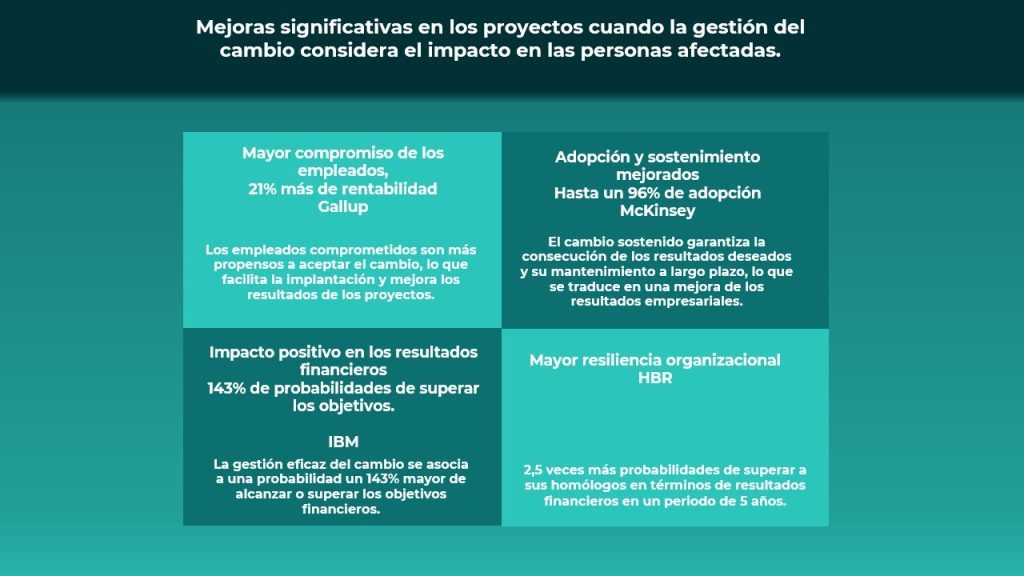
- Greater adoption and usage: enables new solutions and processes to be adopted and used effectively.
- Reduced resistance: minimizes resistance to change and enables a smoother transition.
- Improved performance: aligns people and processes with strategic objectives, improving organizational performance.
- Sustainable change: ensures changes stick and remain sustainable over the long term.
- Better morale and engagement: fosters a supportive, committed environment, improving employee morale.
Consequences of not managing change
- High resistance to change: without proper management, employees are likely to resist the change, which can lead to delays and failed implementations.
- Low adoption and usage: new solutions and processes may not be adopted or used effectively, reducing the expected benefits.
- Negative impact on morale: a lack of support and communication can hurt employee morale and engagement.
- Loss of competitiveness: an inability to adapt to change can cost the organization its competitive edge.
- High costs: failed change implementations can result in additional costs and wasted resources.
Conclusion
In summary, Change Management is an essential discipline for any organization that wants to thrive in a dynamic, constantly evolving environment. At Acertare, we are committed to helping organizations manage change effectively, ensuring benefits are realized and change remains sustainable over the long term.
Facilitating change with Acertare’s approach not only improves the adoption and use of new solutions — it also reduces resistance, improves performance, and fosters a supportive, committed environment. Ignoring change management can have serious consequences, from resistance to change to loss of competitiveness and high costs. That is why it is crucial to approach change in a human, conscious way, ensuring every member of the organization is aligned and prepared for success in achieving business objectives.